Growth feels exciting at first. Revenue climbs. Customers increase. The team expands. Everything looks positive. Cash flow improves, new opportunities appear, and leadership starts planning the next stage of expansion. On the surface, everything seems to be moving in the right direction.
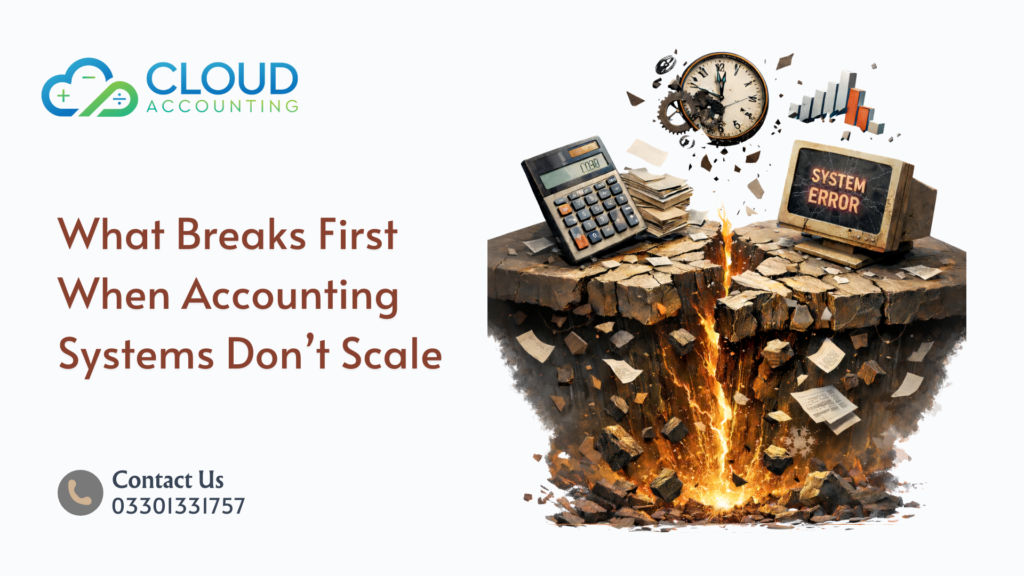
Then small cracks begin to appear.
Reports take longer to run. The month end close stretches out. The finance team spends more time fixing numbers than analyzing them. Dashboards freeze during busy periods. Simple adjustments suddenly require manual workarounds. What used to take minutes now takes hours.
What changed?
In many cases, the issue is not growth itself. It is a lack of Accounting System Scalability. Most businesses choose accounting software based on their current size and needs. That approach works in the early stages. However, as transaction volumes increase, user numbers grow, and reporting becomes more complex, the system begins to struggle.
At first, the strain is subtle. A delayed report. A spreadsheet used for a quick fix. A small integration issue that seems manageable. Nothing feels urgent. But behind the scenes, pressure builds. Data volume increases. Integrations become heavier. Reporting demands expand. The accounting system starts operating near its limits.
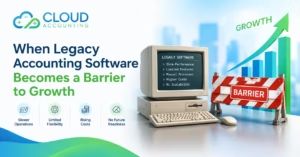
When Accounting System Scalability is missing, these pressures do not disappear. They compound. Processes slow down. Errors increase. Teams spend more time maintaining the system than using it for insight. Instead of supporting growth, the system becomes a bottleneck.
The danger is that most leaders do not recognize the early warning signs. They assume the finance team simply needs more time or more staff. In reality, the problem is structural. An accounting system that cannot scale will eventually restrict decision making, reduce financial visibility, and increase operational risk.
Strong businesses understand that Accounting System Scalability is not a technical detail. It is a foundation for sustainable growth. Without it, success can quietly create instability.
Now let’s examine what usually breaks first and why it matters more than most organizations realize. Growth does not break businesses. Weak systems do.
Accounting System Scalability: What It Really Means
Before we explore what breaks, we need to define the foundation.
Accounting System Scalability means your accounting software can handle increasing demands without slowing down, losing accuracy, or creating process bottlenecks.
It includes the ability to:
- Process higher transaction volumes
- Support more users without performance issues
- Integrate smoothly with other business tools
- Generate real time reports quickly
- Automate repetitive tasks
- Manage complex reporting as operations expand
A small startup might handle a few hundred transactions per month. A growing business might process thousands. Without Accounting System Scalability, the same system that once worked fine begins to struggle.
Many companies start with basic tools. That makes sense early on. But as the business grows, accounting software limitations begin to show.
Reports slow down. System errors increase. Integrations fail. Manual work becomes common.
At that point, the system is no longer supporting growth. It is holding it back.
The First Thing to Break: Reporting Speed and Accuracy
The first visible crack is usually reporting.
At first, it feels minor. A report takes longer to load. The dashboard freezes. Financial statements need small manual adjustments.
Over time, those delays become routine.
Without proper Accounting System Scalability, larger data volumes slow the system down. Queries take longer. Month end closes stretch from days into weeks. Finance teams export data into spreadsheets just to complete basic analysis.
When speed drops, accuracy follows.
Manual adjustments increase the risk of:
- Duplicate transactions
- Incorrect classifications
- Missed journal entries
- Revenue recognition errors
A growing business accounting system must deliver reliable, real time data. Leaders rely on that data to make hiring, investment, and expansion decisions.
If reporting becomes slow or unreliable, decision making suffers.
That is usually the first major sign that Accounting System Scalability is missing.
Integration With Other Systems Starts Failing
Modern businesses do not operate in isolation.
Your CRM connects to invoicing. Your inventory system feeds sales data. Payroll integrates with general ledger entries. E-commerce platforms sync transactions daily.
When Accounting System Scalability is weak, integrations are often the next failure point.
You may notice:
- Sales data not syncing correctly
- Inventory numbers mismatching
- Payroll entries failing to post
- API limits being exceeded
Instead of automation, the team begins manual uploads and data corrections.
This creates more room for error and increases workload.
A strong cloud accounting system should support growing integration demands. When it cannot, your systems stop communicating clearly. And once systems fall out of sync, financial clarity disappears.
Team Productivity Drops and Bottlenecks Appear
Software problems quickly turn into people problems.
When systems slow down, teams feel it.
Logins take longer. Reports freeze. Approvals get stuck. The end of the month becomes stressful. Finance staff spend hours troubleshooting instead of planning.
Without Accounting System Scalability, your growing business accounting system becomes a bottleneck.
Instead of improving efficiency, growth creates friction.
Team morale drops quietly. Burnout increases. Small frustrations add up.
And when your finance team is stretched thin, strategic work gets delayed.
Data Accuracy Begins to Slip
Here is where risk increases.
When systems cannot scale, teams create workarounds. They export reports. and track adjustments in spreadsheets. They build shadow systems outside the main platform.
These short term fixes introduce long term risk.
Without Accounting System Scalability, you may see:
- Duplicate entries
- Delayed reconciliations
- Missing transactions
- Conflicting reports between departments
Manual accounting problems grow over time.
Audit preparation becomes stressful. Financial reviews take longer. Compliance exposure increases.
Data integrity is the backbone of financial health. When that integrity weakens, the entire organization feels unstable.
Customer Experience Quietly Suffers
Accounting issues do not stay internal.
Customers feel them too.
If your system cannot keep pace, you may experience:
- Delayed invoices
- Incorrect billing amounts
- Slow payment confirmations
- Credit limit errors
Customers expect speed and accuracy. When billing mistakes happen or invoices are delayed, trust erodes.
Accounting System Scalability directly affects cash flow and client satisfaction. Revenue cycles slow down when systems fail to support growth.
And delayed revenue impacts everything else.
Small Problems Turn Into Major Financial Risks
At first, the cracks seem manageable.
But over time, they compound.
Without proper Accounting System Scalability, businesses face:
- Poor cash flow visibility
- Weak financial forecasting
- Delayed management insights
- Increased compliance risk
- Slower strategic decisions
Leaders need accurate, real time numbers. If reports are late or unreliable, decisions are based on guesswork.
That is not sustainable for a scaling organization.
Accounting software should empower growth. When it cannot scale, it becomes a financial risk factor.
Clear Signs You Have Outgrown Your Accounting System
If you are unsure whether your system is struggling, ask yourself:
- Is month end taking longer every quarter?
- Are reports often adjusted manually?
- Do you rely heavily on spreadsheets?
- Does system performance slow during busy periods?
- Are integrations unreliable?
- Is it difficult to add new users?
- Does multi entity reporting feel complex?
- Does your team spend more time fixing errors than analyzing performance?
If you answered yes to several of these, Accounting System Scalability is likely an issue.
Waiting rarely solves the problem. In fact, delaying action usually makes upgrading accounting software more disruptive later.
How Cloud Accounting Strengthens Accounting System Scalability
Modern cloud accounting systems are built with scalability at their core. Unlike traditional desktop software, which often struggles as data volume increases, cloud platforms are designed to handle growth without slowing down. This makes a major difference when your business starts processing thousands of transactions instead of hundreds.
A strong cloud accounting system supports real time processing, even when transaction volumes rise sharply. Reports update instantly. Dashboards reflect live data. Finance teams no longer need to wait hours for large reports to generate. This speed protects decision making and keeps leadership informed at all times.
Another major advantage is flexible user access control. As your team grows, you can add new users easily and assign specific permission levels. Managers, accountants, and external advisors can access the data they need without compromising security. This flexibility is a key part of Accounting System Scalability because growth almost always means more people interacting with financial data.
Cloud platforms also provide automatic system updates. There is no need for manual upgrades or costly downtime. As regulations change or features improve, updates are rolled out automatically. This ensures your system remains current and compliant while supporting business expansion.
Integration is another area where cloud solutions stand out. Modern systems connect smoothly with CRM platforms, payroll software, inventory tools, payment gateways, and e commerce platforms. A strong integration ecosystem reduces manual data entry and prevents errors caused by disconnected systems. When your accounting system communicates clearly with the rest of your business tools, operations remain efficient even as complexity increases.
Built in automation tools further strengthen Accounting System Scalability. Recurring invoices, bank feeds, expense categorization, and approval workflows can all be automated. As transaction volume grows, automation prevents workload from growing at the same pace. Instead of hiring more staff just to handle data entry, your team can focus on financial planning and analysis.
Consolidated reporting across multiple entities is another critical feature. As businesses expand into new regions or launch additional business units, financial visibility becomes more complex. A scalable cloud accounting system allows consolidated financial statements without manual compilation. This clarity supports faster and more confident decision making.
A well designed cloud accounting system grows alongside your business. It does not slow down under pressure. It does not force constant workarounds. Instead of adding complexity, it supports efficiency and control.
In simple terms, Accounting System Scalability ensures your finance function remains stable as operations expand. Growth should strengthen your foundation, not test its limits. Cloud based systems make that possible.
When Is the Right Time to Upgrade?
Many businesses upgrade only after a major breakdown.
A smarter approach is proactive evaluation.
Consider upgrading accounting software when:
- Revenue is increasing rapidly
- Transaction volumes double
- You expand into new regions
- You manage multiple business units
- Reporting requirements become more complex
- Investors demand deeper financial visibility
Accounting System Scalability should be part of your growth strategy, not an afterthought.
Upgrading early prevents stress later.
Final Thoughts: Growth Should Strengthen Your Systems
Growth should create opportunity.
It should not create operational strain.
Without Accounting System Scalability, the first thing to break is reporting. Then integrations fail. Team productivity drops. Data accuracy slips. Customer experience suffers.
By the time financial risk becomes visible, the system has already been slowing you down for months.
The solution is not more spreadsheets or more manual checks.
The solution is ensuring your accounting system is built to scale.
At Cloud Accounting, we help businesses evaluate system performance, identify accounting software limitations, and transition to scalable solutions that support long term growth.
If your accounting system feels slower than your business, it is time to review it.
Growth should strengthen your foundation, not crack it.
Now is the time to make sure your system can handle what comes next.
Is Your Accounting System Ready for Your Next Stage of Growth?
Growth should feel controlled, not chaotic.
If reporting is slowing down, integrations are failing, or your finance team is buried in manual work, it may not be a staffing issue. It may be a scalability issue.
Accounting System Scalability is not something to fix after a breakdown. It is something to assess before growth puts pressure on your operations.
At Cloud Accounting, we help businesses:
- Review current system performance
- Identify accounting software limitations
- Assess scalability gaps
- Recommend practical upgrade paths
- Plan smooth transitions to modern cloud platforms
Whether you need a system review or a full migration strategy, we provide clear guidance backed by real experience.
If your business is growing, your accounting system should grow with it.
Book a consultation with Cloud Accounting today and find out whether your system is ready for what comes next.