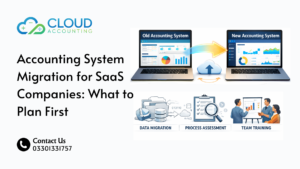
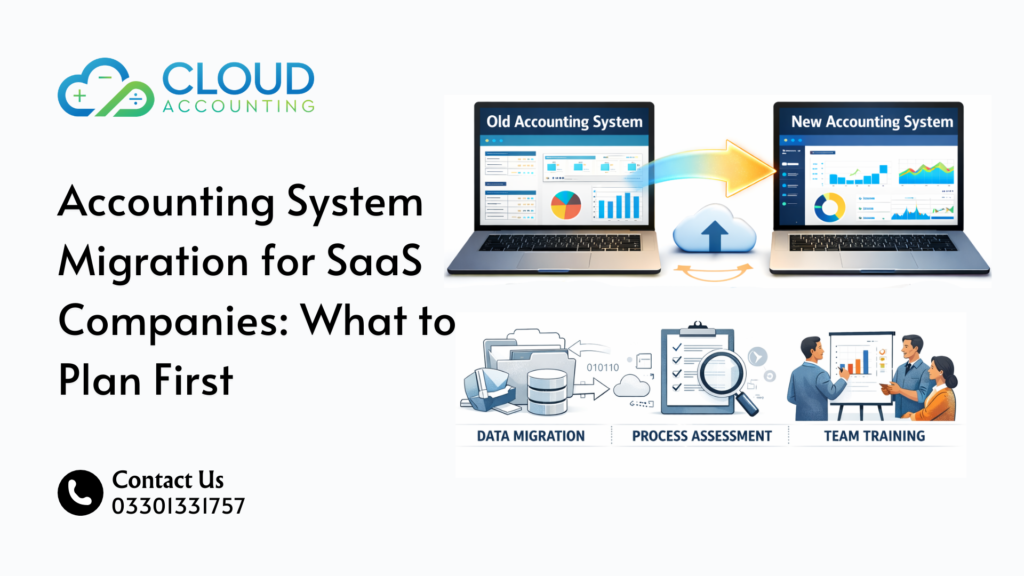
Switching to a new accounting system is a big step for any business. For SaaS companies, the process is even more important because revenue models, subscriptions, and recurring billing make accounting more complex than in traditional businesses.
That is why Accounting System Migration for SaaS Companies needs careful planning before any data is moved. If the preparation is weak, the new system may create reporting errors, revenue recognition problems, and confusion for the finance team.
Unlike product-based businesses that record revenue at the point of sale, SaaS companies must track subscription payments over time. This means the accounting system must handle recurring invoices, deferred revenue, customer plan changes, and automated billing cycles. If the migration is not carefully structured, important financial data such as subscription history or revenue schedules can easily become inconsistent.
Another challenge is that SaaS businesses often rely on several connected systems. Billing platforms, payment gateways, CRM tools, and analytics software are usually tied to the accounting system. During Accounting System Migration for SaaS Companies, these connections must be reviewed to ensure the new platform can continue syncing data correctly. If integrations break, teams may suddenly find themselves doing manual work that the old system handled automatically.
Planning also helps finance teams avoid disruptions to reporting. SaaS companies track key financial metrics such as Monthly Recurring Revenue (MRR), Annual Recurring Revenue (ARR), customer churn, and lifetime value. A poorly planned migration can distort these metrics and make it difficult for leadership or investors to understand the company’s performance.
Good preparation allows companies to migrate with confidence. It ensures historical data remains accurate, revenue is recognized correctly, and financial reports continue to support decision making. With the right planning steps in place, the migration process becomes a strategic upgrade rather than a risky transition.
In this guide, we will look at the key things SaaS companies should plan first before starting the migration with cloud accounting.
Why SaaS Companies Need Careful Accounting Migration
SaaS companies operate very differently from traditional businesses. Instead of one-time sales, most revenue comes from subscriptions that continue month after month or year after year. This creates accounting challenges that require a system designed to manage recurring revenue and changing customer plans.
SaaS businesses usually handle:
- Monthly or annual subscriptions
- Recurring billing
- Deferred revenue
- Customer upgrades and downgrades
- Multiple payment gateways
Each of these elements affects how revenue is recorded and reported. For example, when a customer pays for an annual subscription upfront, the entire payment cannot be counted as revenue immediately. Instead, the revenue must be recognized gradually across the subscription period. This process requires accurate revenue scheduling within the accounting system.
Another factor is the constant change in customer subscriptions. SaaS customers often upgrade plans, downgrade services, or cancel subscriptions. Every change must be reflected correctly in invoices, revenue schedules, and financial reports. If the accounting system does not manage these changes properly, financial data can quickly become unreliable.
Payment processing also adds complexity. Many SaaS companies accept payments through multiple gateways such as Stripe, PayPal, or other online payment platforms. These systems must connect with the accounting platform to record transactions automatically. During Accounting System Migration for SaaS Companies, ensuring these integrations continue working correctly is essential.
Because of these complexities, even a small error during migration can affect subscription data, revenue recognition schedules, or customer billing history. That is why SaaS companies must approach accounting migration with careful planning and clear processes.
A well-planned Accounting System Migration for SaaS Companies helps ensure:
- Accurate revenue recognition across subscription periods
- Clean and reliable financial reporting
- Better integration with SaaS billing and payment tools
- Stronger financial visibility for decision making
- Easier financial management as the company grows
When migration is handled correctly, the new accounting system becomes a powerful tool. It gives SaaS companies better control over their finances, improves reporting accuracy, and supports growth without creating accounting complications.
1. Define the Reason for Migration
Before choosing a new accounting system, the company should clearly define why the migration is happening.
Common reasons include:
- The current system cannot handle subscription revenue properly
- Manual work is taking too much time
- Poor integration with billing platforms like Stripe or Chargebee
- Limited reporting for SaaS metrics such as MRR and ARR
- The company is scaling and needs stronger financial controls
Understanding the real problem helps select the right system instead of simply replacing one problem with another.
2. Review Your Current Accounting Setup
Before migration begins, it is important to review how the current accounting system works.
Check the following areas:
- Chart of accounts structure
- Revenue recognition method
- Subscription billing data
- Customer records
- Financial reports
- Integrations with other software
This step helps identify what data should be migrated, cleaned, or redesigned in the new system.
Many SaaS companies discover during this stage that their chart of accounts or revenue processes need improvement before migration.
3. Map Your Data Carefully
Data mapping is one of the most critical parts of Accounting System Migration for SaaS Companies.
Data mapping means deciding how information from the old system will appear in the new system.
Important data types include:
- Customer records
- Subscription plans
- Payment history
- Invoices
- Revenue schedules
- Expenses and journal entries
Without clear mapping, financial data may become inconsistent, which can create problems during audits or financial reporting.
A detailed mapping plan ensures every important record moves correctly.
4. Plan Revenue Recognition Rules
Revenue recognition is one of the biggest challenges for SaaS accounting.
Subscription payments are often received upfront, but the revenue must be recognized gradually over the subscription period.
During migration, SaaS companies must confirm:
- How deferred revenue will be tracked
- How revenue schedules will be created
- Whether the new system supports automated revenue recognition
- Compliance with accounting standards such as ASC 606 or IFRS 15
If revenue rules are not set properly before migration, financial statements can become inaccurate.
5. Check Software Integrations
Most SaaS companies rely on multiple tools. These systems must connect smoothly with the accounting platform.
Common integrations include:
- Billing platforms (Stripe, Chargebee, Paddle)
- CRM systems
- Payment gateways
- Expense management tools
- Payroll systems
- Financial reporting tools
Before migrating, make sure the new accounting system supports these integrations. Otherwise, manual work may increase instead of decrease.
6. Clean and Prepare Financial Data
Moving messy data into a new system will only create bigger problems.
Before migration begins, SaaS companies should:
- Remove duplicate customer records
- Close old or inactive accounts
- Reconcile bank transactions
- Review outstanding invoices
- Correct accounting errors
Clean data ensures the new accounting system starts with accurate and reliable financial records.
7. Plan the Migration Timeline
A clear timeline helps avoid disruption to financial operations.
The migration plan should include:
- Data preparation period
- System setup and configuration
- Data migration testing
- Final migration date
- Staff training
- Post-migration review
Many SaaS companies choose to migrate at the start of a new financial period to keep reporting simple.
8. Train the Finance Team
Even the best accounting system will fail if the team does not understand how to use it.
Training should include:
- System navigation
- Creating invoices and subscriptions
- Managing deferred revenue
- Running financial reports
- Handling integrations
Good training helps the finance team work confidently with the new system and reduces mistakes.
9. Test Everything Before Going Live
Testing is essential during Accounting System Migration for SaaS Companies.
Before launching the new system, companies should test:
- Sample transactions
- Revenue recognition schedules
- Financial reports
- Subscription billing workflows
- Integrations with external tools
Testing helps catch problems early before they affect real financial data.
Final Thoughts
Accounting migration is not just a technical task. It is a strategic financial decision that can influence how a SaaS company manages growth, reporting, and investor confidence. Because SaaS businesses rely heavily on subscription revenue, automated billing, and connected software tools, even small mistakes during migration can affect financial accuracy.
During Accounting System Migration for SaaS Companies, businesses must think beyond simply transferring data. The process should focus on improving how financial information is structured, reported, and used for decision making. A new accounting system should provide clearer insights into recurring revenue, customer trends, and overall financial performance.
Careful preparation makes a major difference. When companies review their existing setup, clean financial data, plan revenue recognition rules, and test integrations before going live, the transition becomes far smoother. Finance teams can continue working without disruption, and management can trust the numbers being reported.
Planning also helps SaaS companies build a stronger financial foundation for the future. As subscription businesses grow, they often face higher transaction volumes, more complex pricing models, and increased reporting requirements. A properly planned Accounting System Migration for SaaS Companies ensures the new system can support that growth without creating accounting bottlenecks.
In the long run, a well executed migration improves financial visibility and control. SaaS leaders gain better reporting, more reliable data, and clearer insights into business performance. With the right accounting system in place, companies can focus less on fixing financial processes and more on scaling their products and customer base.
Ready to Plan Your Accounting System Migration?
If your SaaS company is considering a system upgrade, planning the migration properly is critical. Subscription revenue, recurring billing, and multiple integrations make SaaS accounting more complex than standard business accounting. Without the right preparation, even small migration mistakes can lead to reporting issues and financial confusion.
That is where experienced migration specialists can help.
At Cloud Accounting, we support SaaS companies through every stage of Accounting System Migration for SaaS Companies. Our team helps review your current setup, prepare your financial data, configure the new system correctly, and ensure all integrations continue working smoothly.
Our migration support includes:
- Review of your existing accounting structure
- Data cleanup and migration planning
- Subscription and revenue recognition setup
- Integration with SaaS billing platforms
- Post-migration testing and support
With the right guidance, your new accounting system can become a powerful financial management tool that supports growth rather than slowing it down.
Thinking about migrating your accounting system?
Contact Cloud Accounting today to discuss your migration needs and discover how the right system can support your SaaS business as it grows.