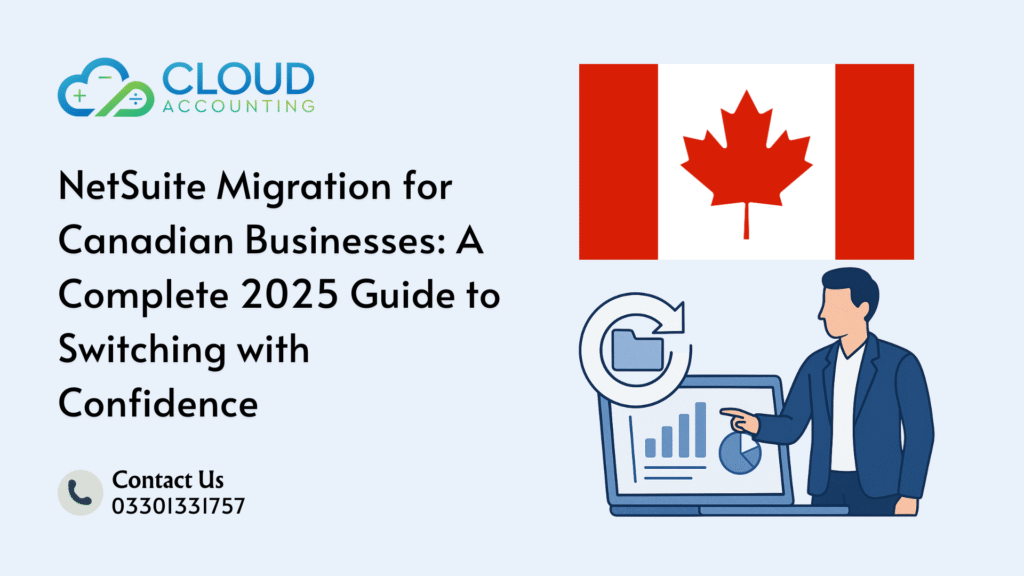
When a Canadian business decides to upgrade its finance and operations system, the first question that comes up is simple: will the move pay off or become a long headache? NetSuite promises real improvements in automation, reporting, and scalability. But the real results only show when the migration is planned and carried out with care. That is why Canadian companies are now searching for the right way to approach NetSuite Migration Canada and avoid the problems that slow teams down.
If you want to understand how the process works, what challenges Canadian businesses face, and how to get the highest return from your new system, this guide will walk you through it step by step. You will see the risks, the opportunities, the best practices, and the decisions that have a direct impact on your long term success.
Why More Canadian Businesses Are Switching to NetSuite in 2025
It is becoming clear that legacy accounting systems and older ERP tools are holding companies back. Canadian finance teams want better accuracy, faster reporting, and a cloud system that fits their growth. That is why interest in NetSuite Migration Canada has grown in every region including Ontario, British Columbia, Alberta, Manitoba, Quebec, and the Atlantic provinces.
Here are the biggest reasons behind the shift:
- Real time financial data from one source
- Fewer manual tasks
- Better tax handling for multi province operations
- Support for multi entity consolidation
- Improved control over inventory and supply chains
- A more reliable system that scales with growth
But even with these advantages, the migration itself is a major project. The quality of your setup will decide how well NetSuite works for you after go live.
The Real Cost of Poor Planning During a NetSuite Migration
Many Canadian companies run into problems not because NetSuite is difficult, but because they start the migration without enough preparation. A successful NetSuite Migration Canada project depends on having the right data, the right process, and the right people reviewing the work.
Here are the mistakes that often lead to costly delays:
- Importing unclean or duplicate data
- Rushing configuration decisions
- Skipping tax and compliance checks
- Ignoring provincial tax variations
- Not mapping old processes to new NetSuite workflows
- Choosing the wrong integrations or ignoring them fully
These problems are avoidable. When a business has a clear plan and expert guidance, the project becomes predictable and less stressful.
What Makes a NetSuite Migration Different in Canada?
If your business is located in Canada or operates across Canadian provinces, your migration has a few extra layers to consider. These details matter because they affect how your transactions will work inside NetSuite.
Here are the main differences:
1. GST, HST, PST, and QST rules
Canada has a unique mix of national and provincial tax systems. Each province follows its own structure. A good NetSuite Migration Canada plan includes tax codes that match your province or provinces. Missing this step leads to incorrect invoices and inaccurate filing.
2. Bilingual documentation needs
Many businesses operating in Quebec or federal spaces need both English and French documents. This may require custom form layouts or templates.
3. Payroll integrations
Most Canadian companies use third party payroll systems. Your NetSuite configuration should support your payroll tool even if you do payroll outside NetSuite.
4. Multi currency requirements
Canadian businesses often deal in both CAD and USD. A clean migration has correct historical exchange rates, account balances, and multicurrency settings.
5. Data storage expectations
While NetSuite is cloud based, some industries need clarity on where data is stored and how backups are handled. Migration partners must guide you through these requirements.
These points can impact design decisions, reporting accuracy, and compliance. That is why tailoring your migration to Canadian rules is essential.
The Four Stages of a Successful NetSuite Migration for Canadian Companies
A migration is not just a straight move of data. It is a controlled project. The following four stage method gives the best chance of success. It is a proven structure used in most successful NetSuite Migration Canada projects.
Stage 1: Assessment and Planning
A strong migration begins with a clear understanding of your business. In this stage, a migration team reviews your current system and planning goals.
Key tasks include:
- Reviewing your existing chart of accounts
- Identifying duplicate or outdated data
- Listing your business workflows
- Documenting all existing software integrations
- Understanding your tax and compliance needs
- Mapping departments, roles, and approval flows
At this point you also plan which data will be carried over. Not every business needs every transaction from the past ten years. A good assessment reduces project time and avoids unnecessary data.
Stage 2: System Preparation and Configuration
In this stage, NetSuite is set up to match your Canadian business operations. This is the most important step because it shapes how your finance team will work each day.
Key configuration steps include:
- Setting up GST, HST, PST, and QST tax codes for each province
- Creating a clear and organized chart of accounts
- Building item records and service codes
- Preparing bank accounts and payment methods
- Setting approval flows for purchasing and expenses
- Configuring multi entity and multi currency settings
- Customizing forms for English and French formats if required
These settings ensure that your company uses NetSuite the right way from the start.
Stage 3: Data Migration and Validation
Once the system is configured, your data is prepared, cleaned, and imported. Good migration teams run several test cycles to confirm accuracy.
This stage includes:
- Cleaning customer and vendor lists
- Importing opening balances
- Importing historical invoices
- Migrating purchases and expenses
- Migrating inventory data and stock levels
- Rebuilding transaction history as needed
Every NetSuite Migration Canada project must include validation. That means checking your trial balance, aged receivables, and aged payables against your old system. Any mismatches are fixed before going live.
Stage 4: Go Live and Support
When everything is ready, your team switches from the old system to NetSuite. On the first few days after go live, it is normal to have questions or find small settings that need adjustments.
During this stage:
- Users receive final training
- Transactions are monitored closely
- Any workflow issues are fixed
- Reports and dashboards are adjusted
- The migration team stays available for support
This support is essential. It gives your team confidence as they begin using NetSuite in real operations.
What Data Should Canadian Companies Bring into NetSuite?
Not all data is equal. Some records are essential. and optional. Some will only slow the system down.
Here is what most companies migrating to NetSuite in Canada bring across:
Must Import
- Customers
- Vendors
- Chart of accounts
- Tax codes
- Opening balances
- Active inventory items
- Bank account details
- Outstanding receivables and payables
Optional Imports
- Full sales history
- Purchase history
- Projects
- Fixed asset registers
- Serial numbers
- Pricing levels
The best NetSuite Migration Canada strategy only brings data that will support your future operations. Old or irrelevant data can harm performance.
How NetSuite Handles Canadian Tax Rules
NetSuite has strong tax features, but the configuration must match Canadian requirements. This part of the migration is critical for accuracy.
GST and HST
These tax codes must be built correctly and linked to your items and transactions. The reporting features depend on correct setup.
PST
Provinces like British Columbia, Saskatchewan, and Manitoba need PST codes with separate reporting schemes.
QST
Quebec has its own combined tax system. NetSuite must handle the calculation and reporting for QST correctly.
Mixed province operations
If your company sells across provinces, NetSuite can automate the tax selection. But this only works when coded correctly in your migration.
Exemptions
If your business has exempt customers or products, your migration must include rules to handle these cases.
A good setup removes guesswork and ensures your reports are always correct.
How Much Does a NetSuite Migration Cost in Canada?
Cost varies based on size, complexity, and the amount of historical data a company brings into NetSuite. But most Canadian businesses fall into these ranges:
- Small business: 15 to 30 thousand CAD
- Mid sized business: 30 to 70 thousand CAD
- Large or multi entity business: 70 to 200 thousand CAD
A full NetSuite Migration Canada project includes planning, configuration, data migration, testing, training, and live support. The cost is driven by the hours required.
Common Challenges Canadian Businesses Face During Migration
Even with a strong team and plan, some issues always need attention.
1. Data inconsistencies
Old accounting systems often contain duplicate or mismatched records. Cleaning data takes time.
2. Inventory mismatches
If your business has warehouses in multiple provinces, stock levels must be accurate before import.
3. Complex revenue models
Subscription revenue, multi year contracts, and project invoicing require extra setup.
4. Reporting needs
Canadian businesses need accurate GST, HST, PST, and QST filings. Reports must be tested carefully.
5. Integration issues
Tools like Shopify, Stripe, Amazon, and payroll systems must be connected. Each connection needs its own setup.
A good migration team solves these issues early to avoid problems later.
Key Integrations Canadian Businesses Use with NetSuite
Most Canadian companies do not use NetSuite alone. They connect it to other tools to improve efficiency.
Common integrations include:
- Shopify
- Amazon
- WooCommerce
- Stripe
- PayPal
- Third party payroll
- Warehouse and fulfillment systems
- CRM systems like Salesforce or HubSpot
A strong NetSuite Migration Canada plan includes integration testing before go live. That protects your workflows from breaking after the system switch.
How Canadian Companies Can Maximize ROI After Migration
Migration is only the first step. Real value comes from continuous training, accurate reporting, automation, and better decision making.
Here are proven ways to increase ROI:
Improve dashboards
Custom dashboards give your team real time visibility into sales, cash flow, and profitability.
Automate manual tasks
Automating approvals, expenses, and purchase orders saves hours each week.
Build better reports
NetSuite can create advanced reports for management, operations, and compliance.
Review workflows
If a process is still slow, NetSuite can often automate or simplify it.
Expand integrations
Connecting NetSuite with sales and fulfillment tools improves speed and reduces errors.
With consistent review, you get higher returns from your investment.
How Cloud Accounting Helps Canadian Businesses Move to NetSuite
A successful migration needs expertise. Cloud Accounting works with Canadian businesses across all provinces to manage accurate and stress free NetSuite projects. Our team understands the tax rules, compliance needs, and operational requirements that Canadian companies face.
Here is how we support your NetSuite Migration Canada:
- Detailed planning and scoping
- Tax and compliance checks for all provinces
- Configuration based on your workflows
- Accurate data migration with validation
- Integration setup for Shopify, Stripe, Amazon, and more
- Training for finance and operations teams
- Full go live support
We help Canadian teams switch to NetSuite with confidence and avoid the problems that come from rushed or incorrect migrations.
Call to Action
If you are planning a move to NetSuite and want a professional migration partner to support your Canadian business, our team is ready to help.
Book a free consultation to start your NetSuite Migration Canada with confidence.