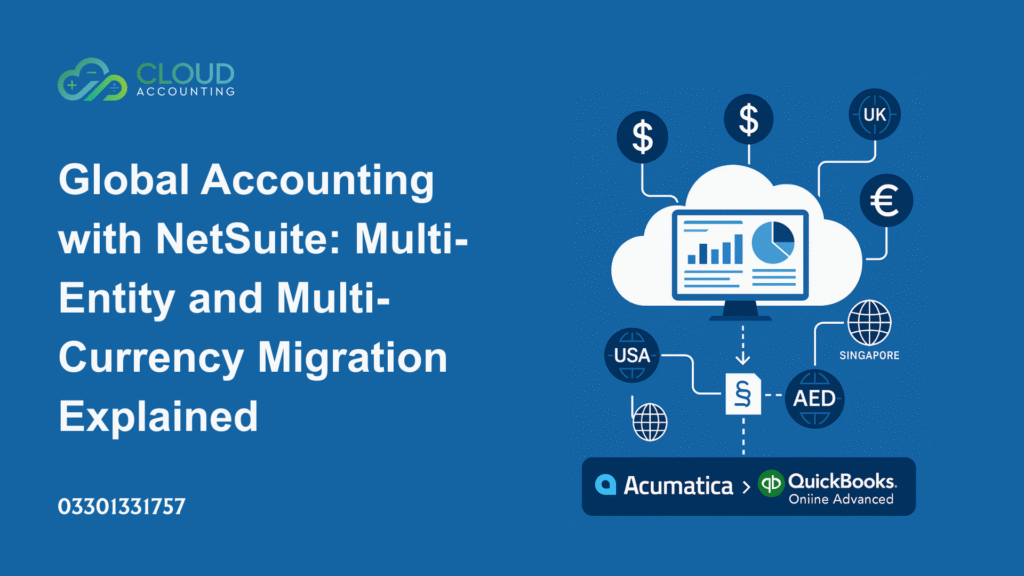
As businesses expand across borders, financial complexity grows rapidly. Managing multiple subsidiaries, currencies, and compliance frameworks in separate systems often leads to errors, delays, and frustrated finance teams. For global CFOs and financial controllers, the question isn’t whether to upgrade — it’s how soon. That’s where a NetSuite Multi-Entity Multi-Currency Migration comes in.
Instead of juggling spreadsheets and disconnected software, NetSuite centralises entities, automates currency handling, and provides real-time insights for decision-making. For companies scaling internationally, this migration is no longer optional it’s essential. The sooner firms adopt NetSuite, the sooner they unlock efficiency, accuracy, and compliance across their global operations.
Why Multi-Entity Accounting Matters for International Firms
Operating across multiple entities means managing different tax rules, reporting requirements, and ownership structures. Without a unified system, firms face data silos, inconsistent reporting, and constant reconciliation headaches. A NetSuite Multi-Entity Multi-Currency Migration solves these challenges by consolidating everything into a single, cloud-based platform.
The advantages of multi-entity accounting software in NetSuite include:
- Centralised entity management with one chart of accounts
- Automated intercompany transactions that eliminate duplication
- Consolidated financial statements with drill-down capability
- Scalable architecture for adding new subsidiaries in NetSuite
This structure ensures every transaction is captured consistently, whether it happens in London, Dubai, or Singapore. Executives gain confidence that their reports reflect true business performance, not a patchwork of disconnected systems.
For companies with subsidiaries in multiple continents, the cost of not migrating is higher: wasted time, increased compliance risks, and unreliable reporting.
NetSuite’s Multi-Currency Capabilities for Global Expansion
Currency management is one of the toughest aspects of international accounting. Exchange rate fluctuations, manual FX entries, and inaccurate consolidations can cause costly mistakes. A NetSuite Multi-Entity Multi-Currency Migration empowers finance teams with advanced currency management tools that reduce risk and improve accuracy.
Key features include:
- Automated exchange rate updates from trusted financial sources
- FX revaluation in NetSuite to keep balance sheets accurate
- Translation adjustments to ensure IFRS and GAAP compliance
- Support for multi-currency bank accounts across subsidiaries
- Consolidated cash flow forecasting in multiple currencies
With NetSuite foreign currency support, CFOs can review consolidated reports in their base currency while local teams transact in their native currencies. This removes reconciliation delays and allows businesses to respond to foreign exchange volatility instantly.
Consolidation Made Simple with NetSuite
Consolidating financials across borders is one of the slowest parts of closing the books. Manual eliminations of intercompany transactions and differing local standards extend close cycles. A NetSuite Multi-Entity Multi-Currency Migration changes this by automating consolidation and providing visibility across every entity.
With NetSuite global consolidation, businesses can:
- Generate consolidated income statements and balance sheets in real time
- Automate eliminations for intercompany accounts and expenses
- Produce drill-down reports to satisfy auditors and investors
- Accelerate close cycles from weeks to days
For executives, this means fewer late nights reconciling spreadsheets and more time focusing on strategy.
Case Examples of Multi-Entity and Multi-Currency Migration
The value of a NetSuite Multi-Entity Multi-Currency Migration is best seen through real-world success stories.
Case 1: E-commerce expansion into Europe
A US-based retailer opened operations in the UK and Germany. Managing USD, GBP, and EUR transactions across separate platforms created errors and compliance risks. After migration, the firm:
- Automated FX translations for multiple currencies
- Produced instant consolidated statements for investors
- Simplified VAT compliance in both the UK and EU
The finance team reduced its month-end close from 15 days to 5, freeing resources for growth initiatives.
Case 2: Manufacturing firm with Asia-US operations
A manufacturer with subsidiaries in Singapore and California faced major reconciliation issues. After a NetSuite Multi-Entity Multi-Currency Migration, they:
- Standardised financial reporting across IFRS and GAAP
- Eliminated 70% of manual reconciliations
- Improved visibility into intercompany transactions
The company gained investor confidence by delivering timely, accurate reports.
Case 3: Professional services with global billing
A consulting firm billing clients in 10+ currencies relied on spreadsheets to track FX. Following migration, NetSuite automated revaluations and generated global P&L reports. The result: faster client invoicing, reduced write-offs, and improved cash flow.
Compliance Across Multiple Jurisdictions
Compliance is often the most underestimated reason to consider a NetSuite Multi-Entity Multi-Currency Migration. Each jurisdiction imposes unique requirements — from VAT in Europe to GST in Australia, US sales tax, or corporate tax in the UAE.
NetSuite provides tools to help businesses maintain cross-border financial compliance, including:
- Configurable tax engines for VAT, GST, and local levies
- Automated reporting aligned with IFRS and GAAP
- Audit-ready logs that track intercompany eliminations
- Localisation packs tailored to specific jurisdictions
With Cloud Accounting’s guidance, companies ensure their NetSuite setup matches every jurisdiction’s standards. This reduces regulatory risks and avoids costly penalties.
How Cloud Accounting Supports Your Migration
Technology delivers the platform, but expertise makes the migration successful. At Cloud Accounting, we specialise in guiding firms through a NetSuite Multi-Entity Multi-Currency Migration with precision and compliance at the forefront.
Our support includes:
- Entity structuring: mapping parent and subsidiary relationships correctly
- Data migration: moving transactions, balances, and FX histories
- Testing consolidated reports before go-live
- Training workshops for finance teams
- Ongoing advisory for compliance updates and expansion
This end-to-end approach ensures businesses not only migrate successfully but also continue to leverage NetSuite effectively as they grow.
Is a Multi-Entity and Multi-Currency Migration Right for You?
Not every business is ready for NetSuite, but there are clear signs that it’s time to consider a NetSuite Multi-Entity Multi-Currency Migration:
- Operating multiple subsidiaries across borders
- Managing transactions in three or more currencies
- Struggling with lengthy month-end close cycles
- Facing rising investor or audit demands
- Experiencing compliance risks in multiple jurisdictions
If these apply, NetSuite delivers the framework needed for sustainable international growth. With real-time financial reporting, automation of intercompany eliminations, and advanced FX support, NetSuite equips global businesses to scale without limits.
Conclusion and Call-to-Action
Global expansion requires an accounting system built for complexity. A NetSuite Multi-Entity Multi-Currency Migration provides the automation, compliance, and insights that fast-growing businesses need. From faster closes to accurate FX management, the benefits extend well beyond efficiency — they enable confident decision-making at scale.
At Cloud Accounting, we combine migration expertise with compliance knowledge to ensure your transition is accurate, secure, and tailored to your industry.
Ready to simplify your global accounting? Book a consultation with our experts today and unlock the full power of NetSuite for your multi-entity, multi-currency operations.