If you’ve been running your business on Oracle E-Business Suite (EBS) for years, you already understand its strengths. It’s powerful, customizable, and built to handle heavy enterprise processes. But you also know one uncomfortable truth: the system is aging. It demands expensive maintenance, hardware, long upgrade cycles, and constant monitoring.
This is the reason so many growing companies are now evaluating a switch to NetSuite. The shift isn’t just about looking modern. It’s about reducing cost, improving speed, and gaining real-time visibility. And that is where [ Oracle EBS to NetSuite Migration ] enters the conversation.
This guide breaks down everything you need to know in 2025, from differences between the two platforms to the complete migration process, risks, timelines, and best practices.
Why Businesses Are Looking Beyond Oracle EBS
Most finance and operations leaders agree that EBS still works, but the cost of keeping it working keeps rising. Every patch, every upgrade, and every integration feels heavier than the last.
Common pain points include:
- High IT infrastructure costs
- Limited real-time reporting
- Heavy reliance on internal developers
- Slow performance during peak use
- Difficult global consolidation
- Complex integration setup
As cloud adoption accelerates, NetSuite becomes a far more attractive alternative. Businesses want agility, not another technical burden. That’s why interest in [ Oracle EBS to NetSuite Migration ] continues growing across mid-market and enterprise segments.
Oracle EBS vs NetSuite: What’s the Real Difference?
At the surface level, both systems are ERPs with financials, operations, and reporting. But under the hood, they operate very differently.
Deployment and Infrastructure
Oracle EBS
- Runs on-premises
- Requires servers, database management, and manual upgrades
- Costly maintenance
- High dependence on IT teams
NetSuite
- Fully cloud-based
- No servers, no local installations
- Automatic upgrades twice a year
- Accessible from any device
For companies wanting to reduce IT dependency, this difference alone makes [ Oracle EBS to NetSuite Migration ] worth exploring.
Reporting and Dashboard Visibility
EBS relies on heavy batch processes. Reports often require custom queries or BI tools.
NetSuite delivers:
- Real-time dashboards
- Automated reporting
- Role-specific analytics
- In-system KPI tracking
Finance teams see the biggest improvements here. What once required hours becomes available instantly.
Customizations
EBS customizations can be complex, often built many years ago and tied to old processes. These scripts make upgrades difficult.
NetSuite customizations work through:
- SuiteFlow
- SuiteScript
- Saved searches
- Configurable workflows
They’re easier to maintain and update, which simplifies long-term system management.
Integrations
EBS integrations often require custom middleware.
NetSuite offers:
- REST and SOAP APIs
- Prebuilt connectors
- Marketplace apps for ecommerce, CRM, logistics, and banking
If your current ecosystem feels too stitched together, moving to NetSuite removes a lot of that friction.
Scalability
Both platforms scale well, but they do it differently.
EBS scaling requires:
- More hardware
- More IT capacity
NetSuite scaling happens automatically, especially for:
- Multi-entity businesses
- Multi-currency accounting
- Global expansion
This is one of the reasons companies planning international growth choose [ Oracle EBS to NetSuite Migration ].
Who Should Consider Migrating from Oracle EBS to NetSuite?
Not every EBS user needs to move, but you might be ready if:
- You want to cut long-term IT expenses
- Your team needs real-time insights
- Your workflows require too many workarounds
- You’re expanding to new regions or subsidiaries
- You want a unified system with CRM, finance, and operations
- You want easier integrations with modern tools
If two or more of these sound familiar, exploring [ Oracle EBS to NetSuite Migration ] is a logical next step.
The Complete Oracle EBS to NetSuite Migration Journey
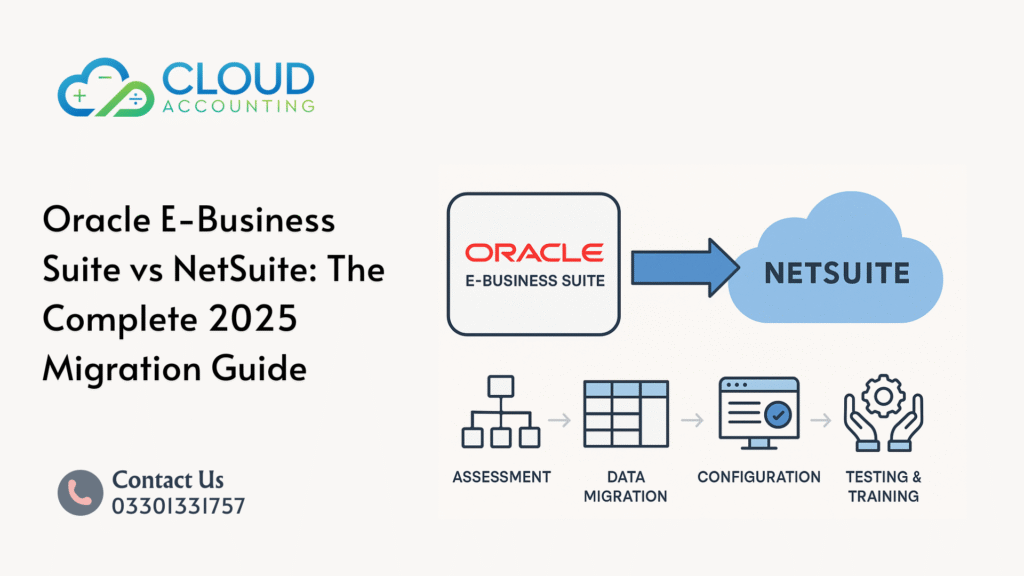
Migrating from EBS to NetSuite isn’t a copy-paste job. It’s a structured transformation. Below is the step-by-step journey businesses typically follow.
Step 1: Discovery and System Assessment
Everything begins with an in-depth assessment of your EBS setup.
This includes:
- Listing all EBS modules currently in use
- Reviewing dependencies
- Mapping integrations
- Understanding reporting workflows
- Evaluating custom scripts and logic
This step defines the scope and architecture of your [ Oracle EBS to NetSuite Migration ].
Step 2: Data Mapping and Clean-Up
EBS data is often large, old, and cluttered.
This phase includes:
- Standardizing master data
- Removing duplicates
- Fixing naming inconsistencies
- Rebuilding item hierarchies
- Cleaning customer and vendor lists
- Preparing migration templates
Clean data means smoother NetSuite operations.
Step 3: NetSuite Configuration
Once data and processes are understood, the new system is configured.
Configuration covers:
- Chart of accounts
- Tax settings
- Roles and permissions
- Approval workflows
- Subsidiary hierarchy
- Inventory rules
- Revenue recognition
The goal is to simplify where possible but preserve what’s essential.
Step 4: Rebuilding Necessary Customizations
Not everything from EBS needs to be ported over. In fact, many customizations exist only because EBS lacked a native solution.
NetSuite’s built-in features often replace 30–50 percent of legacy scripts.
What remains can be rebuilt using:
- SuiteScript
- SuiteFlow
- Custom records
- User event scripts
This step ensures your unique requirements remain intact after the [ Oracle EBS to NetSuite Migration ].
Step 5: Data Migration Execution
Now your data flows into NetSuite in carefully planned waves.
Typical sequence:
- Master data
- Opening balances
- Open transactions
- Inventory details
- Historical records (if needed)
Large enterprises may also migrate:
- Purchase history
- Sales orders
- Fulfillment data
- Manufacturing records
Each import is validated before moving to the next.
Step 6: Testing, Testing, and More Testing
Testing is the heart of every successful ERP migration.
Testing phases include:
- User acceptance testing
- End-to-end process validation
- Financial reconciliation
- Integration testing
- Permissions testing
Any gaps discovered are fixed before go-live.
Step 7: Training and Change Management
Even the best system fails when users aren’t ready.
Effective training includes:
- Role-based sessions
- Scenario-based workshops
- Administrator training
- Step-by-step documentation
This ensures your team is confident and comfortable before NetSuite becomes the daily system.
Step 8: Go-Live and Hypercare Support
Go-live isn’t the finish line. It’s the moment everything becomes real.
During hypercare, teams:
- Monitor daily processes
- Validate balances
- Check integrations
- Address user questions
- Adjust dashboards and searches
This is when the final polish is applied.
Common Challenges During Migration
A move from EBS to NetSuite may bring up challenges such as:
Legacy Customizations
Old scripts may not translate directly. Many can be replaced with NetSuite workflows.
Large Volumes of Data
EBS users often have 10+ years of data. Migrating everything slows down the project. Most teams only migrate the past few years.
Integration Shifts
Some EBS integrations require redesigning in NetSuite.
Resistance to Change
Training and early communication solve this.
Rushing Testing
Skipping testing is the biggest cause of post-go-live issues in [ Oracle EBS to NetSuite Migration ] projects.
Benefits You’ll See After Migrating
Once you switch to NetSuite, improvements become obvious across your business.
Faster Financial Close
Tasks that once took days shrink to hours.
Lower IT Overhead
No servers. and patching. No manual upgrades.
Better Visibility
Dashboards update instantly for:
- Revenue
- Margin
- Expenses
- Inventory
- Cash flow
Modern Integrations
NetSuite connects easily to:
- Shopify
- Salesforce
- Amazon
- Banking feeds
- Tax tools
Easier Global Expansion
Multi-currency and multi-subsidiary features are built right into NetSuite’s core.
What Not to Migrate from EBS
Part of a clean migration strategy is deciding what to leave behind.
Skip migrating:
- Unused customers or vendors
- Old inventory items
- Obsolete workflows
- Outdated cost centers
- Logs and temporary tables
- Legacy code that no longer adds value
Less clutter means higher performance.
Frequently Asked Questions
How long does an Oracle EBS to NetSuite migration take?
Most projects take 4 to 9 months depending on data volume and complexity.
Do we need to migrate all historical data?
No. Most businesses migrate 1 to 3 years. Older data can be archived externally.
Can NetSuite handle global accounting like EBS?
Yes. NetSuite excels at multi-entity, multi-currency, and consolidated reporting.
Will we lose functionality by switching?
In most cases, NetSuite adds capabilities rather than reducing them, especially with its unified CRM + ERP system.
Can we run EBS and NetSuite in parallel during the transition?
Yes. This is common during testing.
Final Thoughts
Staying on EBS might feel safe, but it also means staying tied to high costs, slow upgrades, and heavy infrastructure. NetSuite offers a modern, flexible cloud platform that removes those barriers and sets your business up for faster growth.
If you’re evaluating your options, a well-planned Oracle EBS to NetSuite Migration could be one of the most important decisions your business makes over the next few years.
Ready To Plan Your Oracle EBS to NetSuite Migration?
If you are serious about moving away from Oracle EBS, you do not have to figure it out on your own. A well planned Oracle EBS to NetSuite Migration reduces risk, protects your data, and helps your team get value from NetSuite faster.
At Cloud Accounting, we help finance and operations leaders move from legacy systems to modern cloud ERPs with clear steps and no guesswork.
Here is how we can help you with Oracle EBS to NetSuite Migration:
- Migration assessment
We review your current Oracle EBS setup, modules, data, and customizations and give you a clear migration roadmap. - Data and process design
We help you decide what to move, what to clean, and what to retire so NetSuite starts with accurate, usable data. - NetSuite build and migration
We configure NetSuite around your business and handle the actual data migration from Oracle EBS. - Training and go live support
We prepare your finance and operations team, support you through go live, and stay with you during the first months.
If you are planning Oracle EBS to NetSuite Migration in the next 6 to 12 months, Book a call today, now is the right time to start the conversation.