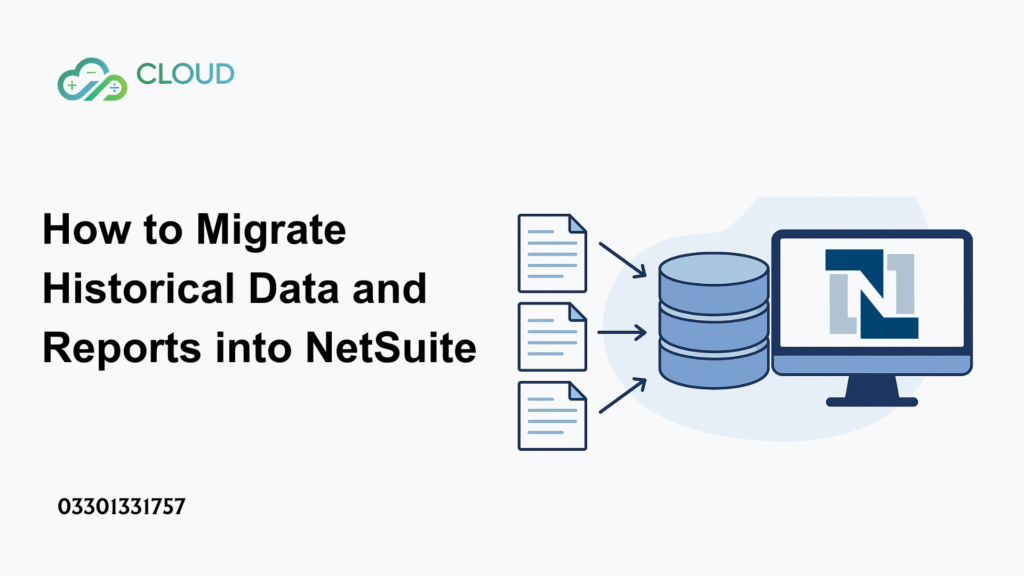
When companies plan an ERP migration, most focus on ensuring current balances and transactions are correct. But what about the past? Imagine trying to explain revenue trends to investors without five years of data, or facing an audit with only the last six months available. That’s why Historical Data Migration to NetSuite is not a luxury it’s essential.
Your past records form the backbone of business decisions. Without them, forecasting, reporting, and compliance become guesswork. Migrating history into NetSuite gives your finance team a complete, single source of truth that strengthens growth and protects against risk.
Why Historical Data Matters in Business Growth
For small businesses, transaction history often lives in spreadsheets. For mid-sized firms, it may be spread across legacy software, local drives, or even paper. As companies grow, these fragmented records turn into a liability. A modern ERP like NetSuite can transform how you use history but only if it’s migrated correctly.
Here’s why Historical Data Migration to NetSuite matters for growth:
- Better forecasting: Past sales and expenses allow you to model accurate cash flow and budgets.
- Customer insights: Sales history reveals which clients generate long-term value.
- Vendor negotiations: Knowing supplier payment patterns improves leverage.
- Strategic planning: Financial reporting in NetSuite built on full historical data provides stronger insights for expansion.
Think of history as the context behind every balance sheet. Without it, your financials lack depth, and decision-making suffers.
Challenges with Transaction History
While businesses recognize the value of history, actually moving it is where complexity begins. Many companies underestimate what’s involved in Historical Data Migration to NetSuite and face costly rework later.
Common challenges include:
- Data quality issues: Legacy systems often contain duplicates, missing invoices, or poorly coded entries.
- Different standards: Subsidiaries may use varying charts of accounts, tax treatments, or fiscal calendars.
- Multi-currency complications: Converting years of foreign transactions means handling historical exchange rates correctly.
- System limitations: Older accounting platforms may not export in structured formats, requiring custom extraction.
- Volume of records: Some companies migrate millions of transactions, testing system limits and timeframes.
Real-world example: One retail client we worked with had 15 years of POS history across three systems. Without cleaning and validating, their NetSuite reports would have been riddled with inconsistencies. By addressing issues upfront, their Historical Data Migration to NetSuite delivered clean records that auditors could trust.
How We Ensure Accuracy in Historical Data Migration to NetSuite
Accuracy is the foundation of trust. A single missing invoice can throw off reconciliations and damage stakeholder confidence. That’s why Cloud Accounting follows a strict methodology for Historical Data Migration to NetSuite.
Our accuracy assurance process includes:
- Data assessment: Identifying gaps, duplicates, and anomalies before migration begins.
- Mapping rules: Aligning old account codes, departments, and tax types with NetSuite’s structure.
- Secure transfer protocols: Using encryption during every stage of the secure data migration process.
- Automated reconciliation: Cross-checking balances and line items against legacy ledgers.
- Parallel testing: Running historical financial reporting in NetSuite side by side with old system reports.
- User validation: Involving finance teams in reviews so they trust the results.
For industries like healthcare or financial services, accuracy isn’t optional — it’s mandatory. By following these steps, Historical Data Migration to NetSuite ensures every transaction, from the first sale to the latest payment, is carried across correctly.
Audit and Compliance Benefits
Audits are stressful enough without incomplete data. Regulators, tax authorities, and investors expect instant access to prior years’ financials. Failing to provide them can lead to penalties, reputational damage, or even lost funding. That’s why Historical Data Migration to NetSuite is a compliance enabler as much as a business advantage.
Key compliance benefits include:
- Meeting retention laws: Many countries require records to be stored for 6–10 years.
- Faster audits: Auditors can run reports directly in NetSuite instead of requesting legacy exports.
- Tax reviews: Historical VAT/GST returns can be traced back to original invoices.
- Accounting standards alignment: Whether GAAP or IFRS, NetSuite’s reporting tools maintain consistency across time periods.
- Risk reduction: Secure storage reduces the chance of data loss compared to legacy servers.
Once migrated, your history becomes searchable, secure, and audit-ready. With Historical Data Migration to NetSuite, compliance goes from a burden to a streamlined process that supports transparency.
Industry Scenarios: Who Needs Historical Data Migration Most?
Not every business faces the same risks, but for some, history is mission-critical. Here are industries where Historical Data Migration to NetSuite creates the most impact:
- E-commerce and retail: Transaction volumes are massive, and trends rely on historical purchase patterns.
- Manufacturing: Supply chain reporting depends on years of vendor and inventory data.
- Healthcare: Regulatory compliance requires detailed patient billing records.
- Financial services: Investors demand multi-year transaction trails for trust and compliance.
- International businesses: Multi-currency history is crucial for global reporting accuracy.
By migrating history into NetSuite, these industries not only preserve compliance but also gain insights that fuel smarter decisions.
Is Now the Right Time for Historical Data Migration to NetSuite?
Businesses often ask whether they should migrate history immediately or wait. The reality is, delaying adds cost and risk. If you migrate only current balances today, someone will eventually need to access the past — and pulling it from retired systems becomes more expensive over time.
Signs it’s time for Historical Data Migration to NetSuite now:
- You’re preparing for an IPO or outside investment.
- Your company is expanding internationally.
- Auditors repeatedly request legacy reports.
- Your finance team still maintains off-system spreadsheets.
- Compliance requirements are tightening in your sector.
If any of these apply, the sooner you migrate, the smoother your NetSuite adoption will be.
Conclusion: Protect Your Past to Build a Stronger Future
Your company’s financial history isn’t just a compliance requirement — it’s one of the most valuable strategic assets you own. Every invoice, expense, and customer payment tells a story about how your business has grown, where it has struggled, and what opportunities lie ahead. Without that foundation, future reporting is incomplete, and decision-making becomes riskier.
Investing in Historical Data Migration to NetSuite means:
- Preserving your complete financial journey for reporting and forecasting.
- Strengthening audit readiness and compliance with tax authorities.
- Equipping your finance team with accurate data to support better decisions.
- Eliminating reliance on outdated systems or fragile spreadsheets.
- Building stakeholder confidence through transparent, reliable records.
At Cloud Accounting, we don’t just move data — we deliver accuracy, compliance, and peace of mind. Our proven process ensures your past records are migrated securely, validated thoroughly, and fully usable in NetSuite from day one.
The businesses that thrive in fast-changing markets are those that use their past to build their future. Don’t let years of history sit unused in old systems or risk being lost.
Take control today. Talk to our NetSuite experts at Cloud Accounting about a tailored plan for your Historical Data Migration to NetSuite and turn your financial history into a growth advantage.